One of the last Mystery Theatre Unlimited scripts Bert and I wrote together arrived a few pages at a time as text messages. He no longer had a computer, and I couldn’t read his handwriting anyway. So scenes appeared on my phone: dialogue, jokes, ideas, long stretches of script typed out with two thumbs. I’d assemble them into a play, send back revisions, and another batch would arrive.
It wasn’t how either of us imagined writing theatre.
By then, though, the method no longer mattered. The collaboration had become larger than the mechanics.
Chris Bontos and I wrote songs together from the time I was sixteen until I was about thirty-two. We picked it back up for a few years around forty. Thirty years of doing that isn’t a habit you retire on schedule.
We haven’t spent much time together in years now, and I’m confident that if we sat down together next week, we’d have four or five new songs finished in a few days. That’s just what we do.
It was the easiest, most seamless collaboration I’ve ever had.
Not because we never disagreed. We’re both perfectionists, and perfectionists find things to disagree about. But somewhere early on we both accepted the same fact: there’s no such thing as a perfect pop song. Once you believe that, a surprising number of arguments stop being necessary. We’d finish a song, call it done, and sometimes polish it anyway—not because it was broken, but because we felt like it. Both of those things were fine.
We didn’t need a rule for what happened when we disagreed because, most of the time, we already wanted the same thing: three minutes, a hook you couldn’t shake, and nothing in the way of it.
That’s the kind of trust that doesn’t announce itself. It just shows up already finished.
Chris and I had put together the chords and melody line, with Chris singing nonsense lyrics as we found the shape of the song. As the music evolved, I began to think that a poem called “Waiting for Godot,” which I had written some time earlier, might provide a framework.
Four stanzas, complete on the page—or as complete as a poem could be. When I began adapting it to the song’s structure, the page opened back up. Lines lengthened. Images changed. Phrases began repeating. I marked the places where a chorus should return and added a final refrain that had not existed in the poem.
By the time I went back to Chris with my revisions, I wasn’t handing him a finished lyric with instructions for how it should sound. I was handing him my side of a song. I trusted that he would hear the rest of it.
That was how our collaboration worked. Neither of us needed to protect the part we had already made from what the other person might do next.
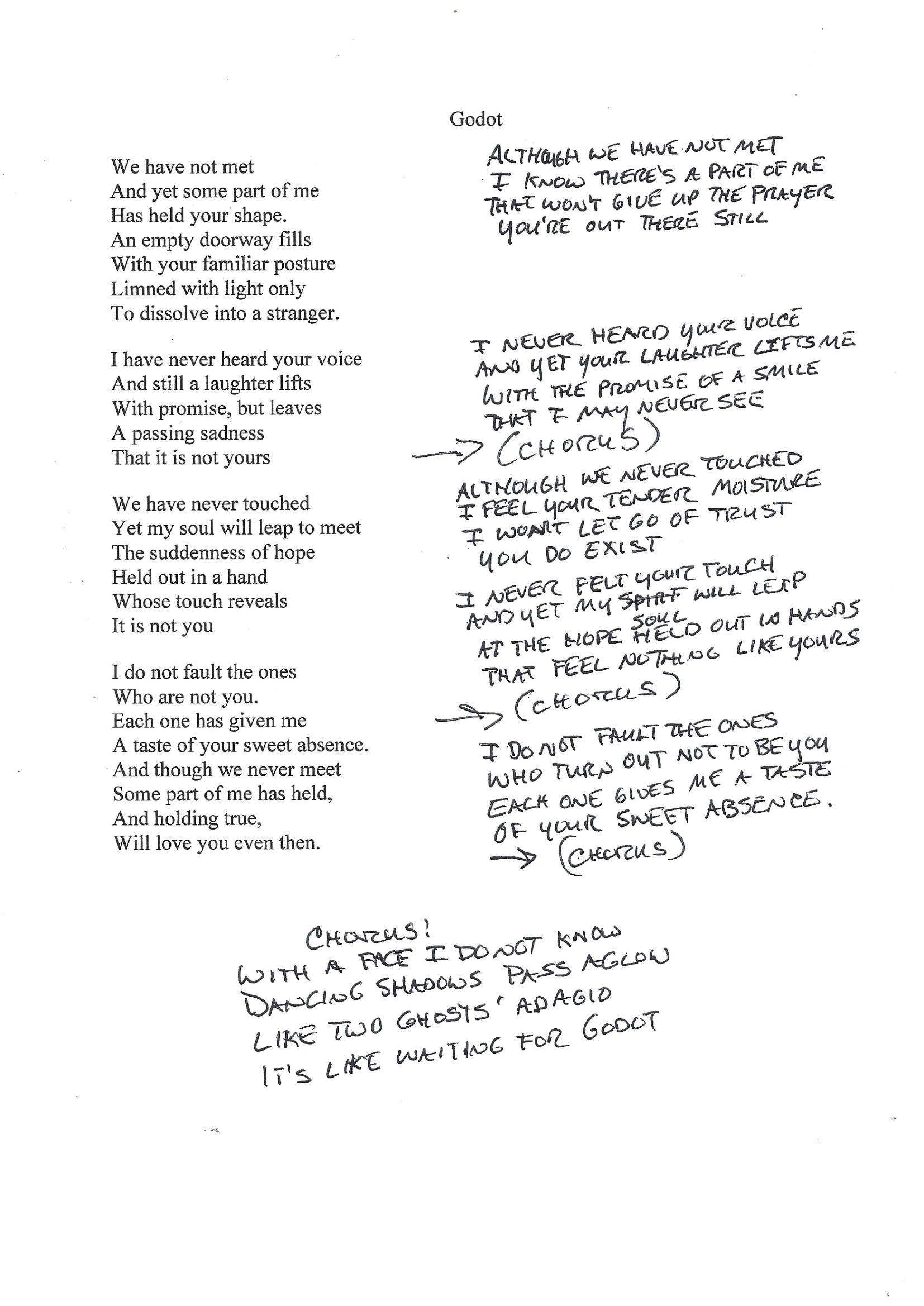
“I was handing him my side of a song. I trusted that he would hear the rest of it.”
Bert and I didn’t have that. Not right away, and honestly, not ever completely.
When we were writing short sketches together, it didn’t matter much. A sketch belonged mostly to one writer, and the other just sharpened it—a better line here, a stronger ending there. Sketch writing rewards knowing when to leave.
Murder mysteries don’t work that way.
There’s no single scene that belongs to one of you. A joke in Act One has to still be true in Act Three. A character has to want the same thing on page ten that they wanted on page one, or the mystery stops being fair to the audience trying to solve it. Long-form doesn’t reward knowing when to leave a bit. It requires knowing what the whole show is carrying all the time, in every scene—and Bert and I didn’t always agree what that was.
Bert and I did not begin with the same instinct. He heard the laugh first. I heard what the laugh might cost the scene. For too long, every disputed joke became an argument about whether it was funny, which was almost never the real question.
Eventually we built a rule.
If a joke derailed a character or the plot,
it came out of the show.
He could use it somewhere else—another script, another character who could actually carry it. The joke didn’t die. It simply hadn’t earned its place in this particular room.
The rule protected both things we cared about. I didn’t have to pretend a good joke was bad. Bert didn’t have to experience removing it as losing it. We stopped asking whether the joke deserved to live and started asking whether it belonged in this play.
ARTIFACT SEQUENCE
Bert’s Pages. My Margins.
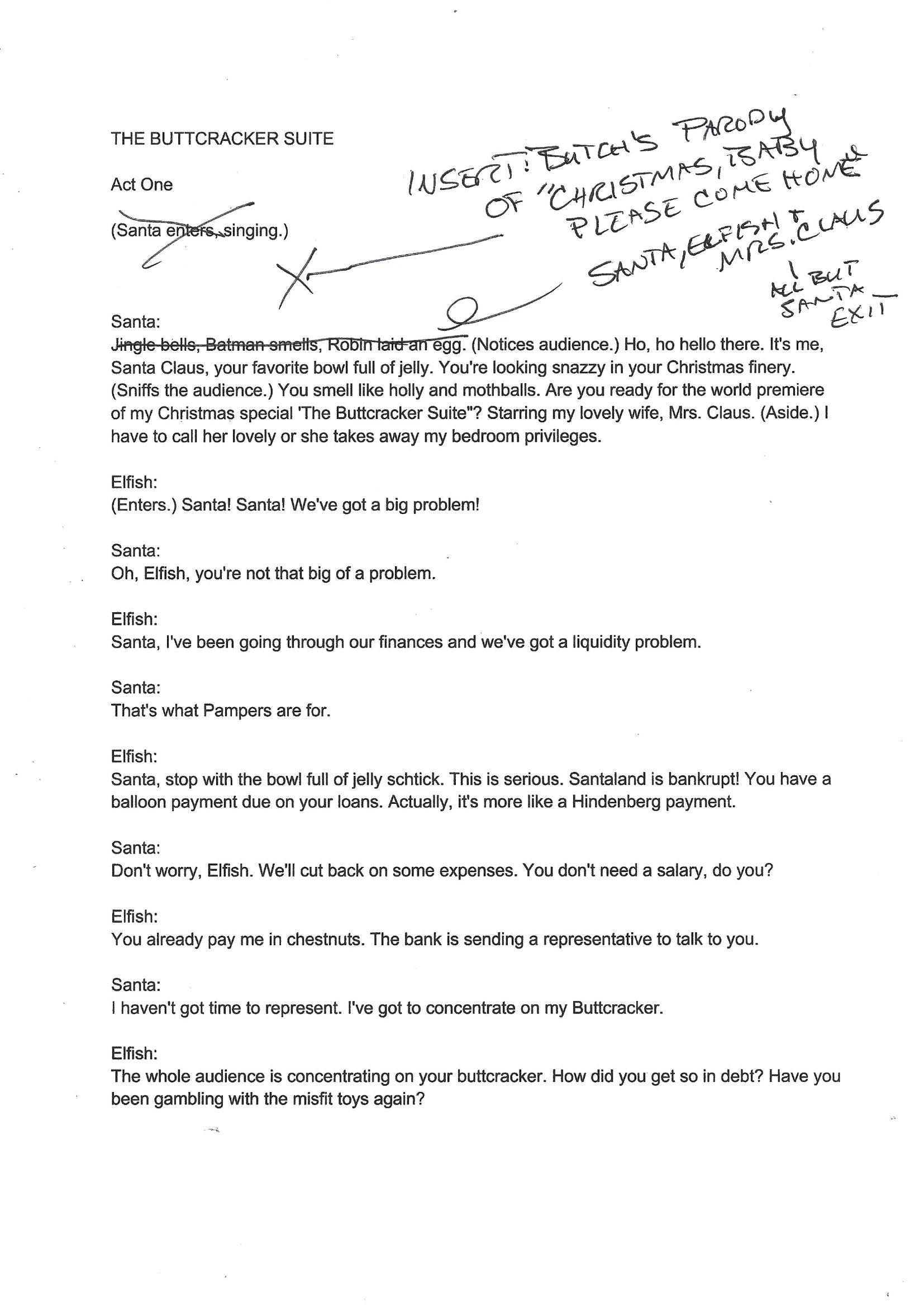
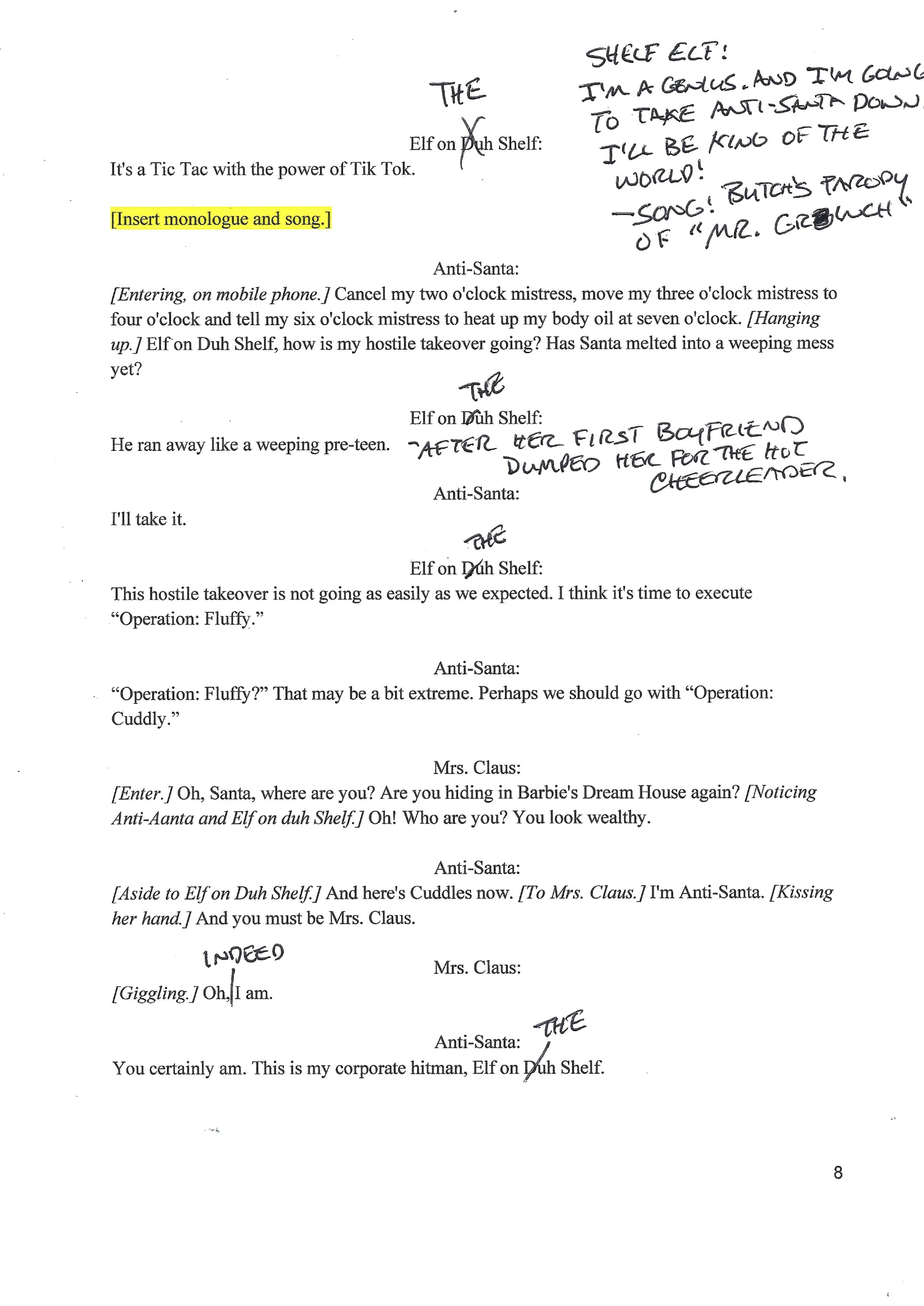
“That was constructed trust: not agreement, but a process sturdy enough to hold disagreement.”
With both of them, eventually, I stopped having to explain my reasoning before they’d trust it. But it meant something different in each case.
With Chris, trust looked like arriving independently at the same instinct.
With Bert, trust looked like a rule we built on purpose because we knew we wouldn’t always agree, and we needed something sturdier than good faith to fall back on.
One kind of trust was discovered.
The other was constructed.
I’m not sure either one is more real than the other.
I still write Mystery Theatre Unlimited scripts. I write them alone now. There’s no batch of texts arriving at odd hours, no second pair of thumbs finishing a joke I’d left half-built, no one to fight me on whether a bit is worth what it costs the plot.
The plays get written anyway.
That was never really in question.
What I notice is smaller than that.
I’ll write a line, and some old reflex will still check it against him. Would this survive Bert, or would he dig in and make me defend cutting it?
Not because I expect an answer.
Thirty years of doing that isn’t a habit you retire on schedule.
The last play arrived one text message at a time.
By then, we had spent so many years writing together that the distance between our phones was the least interesting thing about the collaboration.